

 Salesforce
 Stripe
 HubSpot
 Chargebee
 PayPal
 Wise
Wise Tango Card
 Tremendous
 Recurly
 Braze
Braze Zapier
 Webhooks





Choose The Perfect Referral Program Incentives (Easy as 1, 2, 3)
Learn why and how to choose an incentive for your referral program. Discover the best referral program incentives that will turn visitors into customers!

If you've raised a Seed or Series A, you're eligible for up to 50% off your first year plus additional usage bonuses.
Learn more →Gift cards are one of the most common referral rewards because they solve a problem cash and credit cannot: they work for people who are not your customers. A B2B referrer who recommends your software never buys it themselves, so a discount is worthless to them. A $50 gift card is not.
| Gift card | Cash | Account credit | |
|---|---|---|---|
| Works for non-customers | Yes | Yes | No |
| Needs a payout method on file | No, email only | Yes | No |
| Costs you face value | Yes | Yes | Only margin |
| Reinforces your product | No | No | Yes |
Many programs mix them: credit for the referrer who is a customer, a gift card for the referred friend, or a gift card for referrers who are not customers at all. See double-sided referral.
Tie the amount to what a referred customer is worth. A $10 card is fine for a $30 subscription; a $200 card is reasonable for a deal worth thousands. Pay the larger amount only when the referral qualifies, for example when the friend becomes a paying customer, and consider tiered rewards so the fifth referral earns more than the first. Cap rewards per month or per year if your industry has compliance limits on incentives.
Gift card rewards are normally fulfilled through a rewards provider that holds a catalog of retailers. The program funds a balance up front, the provider emails the winner a redemption link, and the winner picks a card. Fulfillment should wait until the referral has passed fraud checks, and the email should come from your brand, not the provider's.
In the United States, gift cards count as income at face value. Referral rewards paid to customers are generally treated as prizes or other income and reported on Form 1099-MISC once the recipient crosses the IRS threshold; commissions paid to affiliates fall under Form 1099-NEC. Keep a record of every card issued. This is not tax advice; confirm your obligations with a tax professional.
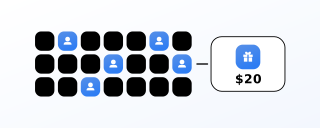
GrowSurf fulfills gift card rewards for referral programs automatically through Tango Card and Tremendous. When a participant earns a connected reward, they get an email from your company with a redemption link and pick the card they want: top retailers such as Amazon and Starbucks or a donation to a non-profit through Tango Card, or hundreds of brands and a prepaid Visa through Tremendous. You never handle a gift card code.
You fund a balance up front and cards cost face value. Each reward pays either when the referred friend signs up or when they complete a qualifying action, and rewards go out only after GrowSurf's fraud checks. Reward limits per month, per year, or in total keep spending under control, and the Tax Center counts gift card rewards toward each recipient's reportable total for year-end 1099 filing.
In the US, yes. A gift card is income at face value. Referral rewards to customers are generally reported on Form 1099-MISC and affiliate commissions on Form 1099-NEC once the recipient reaches the IRS threshold. This is not tax advice; check with a tax professional.
Base it on the value of a referred customer. Common ranges are $10 to $25 for consumer subscriptions and $50 to $250 for B2B software, with the larger amount paid only when the referral qualifies.
Cash requires a payout method such as PayPal on file and reads as a payment. A gift card only needs an email address and reads as a thank-you. Use gift cards when your referrers are not customers or when you want the reward to feel like a gift.
Yes. That is their main advantage over account credit or discounts. Anyone with an email address can receive and redeem one.
Launch a refer-a-friend or affiliate program that lowers your acquisition costs and builds customer loyalty, with little engineering work.
Trusted by marketing and product teams that grow through customer, user, and partner referrals.
Thanks. You're signed up.
Something went wrong. Please try again.
See referral programs that our customers have implemented.
Thanks. View the GrowSurf customer examples.
Something went wrong. Please try again.