
 Salesforce
 Stripe
 HubSpot
 Chargebee
 Recurly
 PayPal
 Tango Card
 Webhooks
 Zapier



Learn more
Built for startups,
scaled for unicorns
Successfully submitted!
Error! Please try again
See what it takes to set up a referral/affiliate program
Explore GrowSurf's powerful referral marketing platform
Watch a video demo of setting up a referral/affiliate program
GrowSurf plugs into your existing tools
GrowSurf vs other referral software providers
Explore our free suite of referral marketing tools.
Explore our free suite of tools built for startups.
Get discounts on top software and services like Notion, Deel, Apollo, and 1Password.
Explore Deals →
Our free loyalty software lets you reward your customers when they leave reviews, share on social media, and mention your brand.
Get It Free →Can you guess which startups made these growth tactics famous? Test your knowledge of innovative marketing strategies that led to explosive growth.
Play Now →
Want the full setup walkthrough?
Use these docs for exact setup steps, supported fields, and troubleshooting.
GrowSurf's ActiveCampaign integration already handles the contact sync. After the connection is enabled, GrowSurf can add or update contacts in the selected list and keep referral fields current as participants join, refer friends, and move toward rewards.
That means you can build ActiveCampaign segments from the live referral data already on the contact record instead of maintaining a separate tagging workflow. The most useful fields to start with are %GROWSURF_TOTAL_REFERRAL_COUNT%, %GROWSURF_REFERRAL_STATUS_ID%, %GROWSURF_NEXT_MILESTONE%, and %GROWSURF_SHARE_URL%.
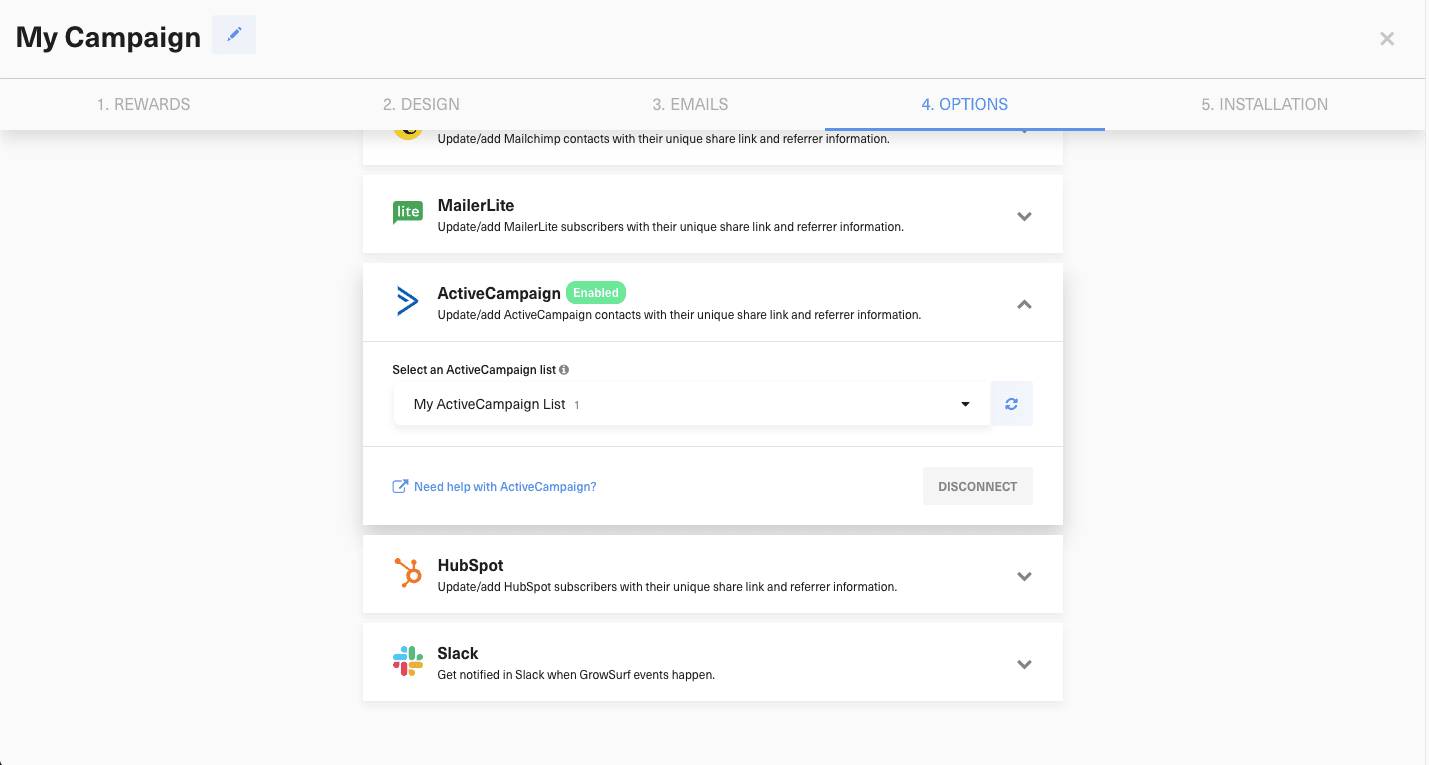
Save the list your team actually uses for referral and lifecycle campaigns. That keeps the GrowSurf fields on the same contacts you will filter inside ActiveCampaign.
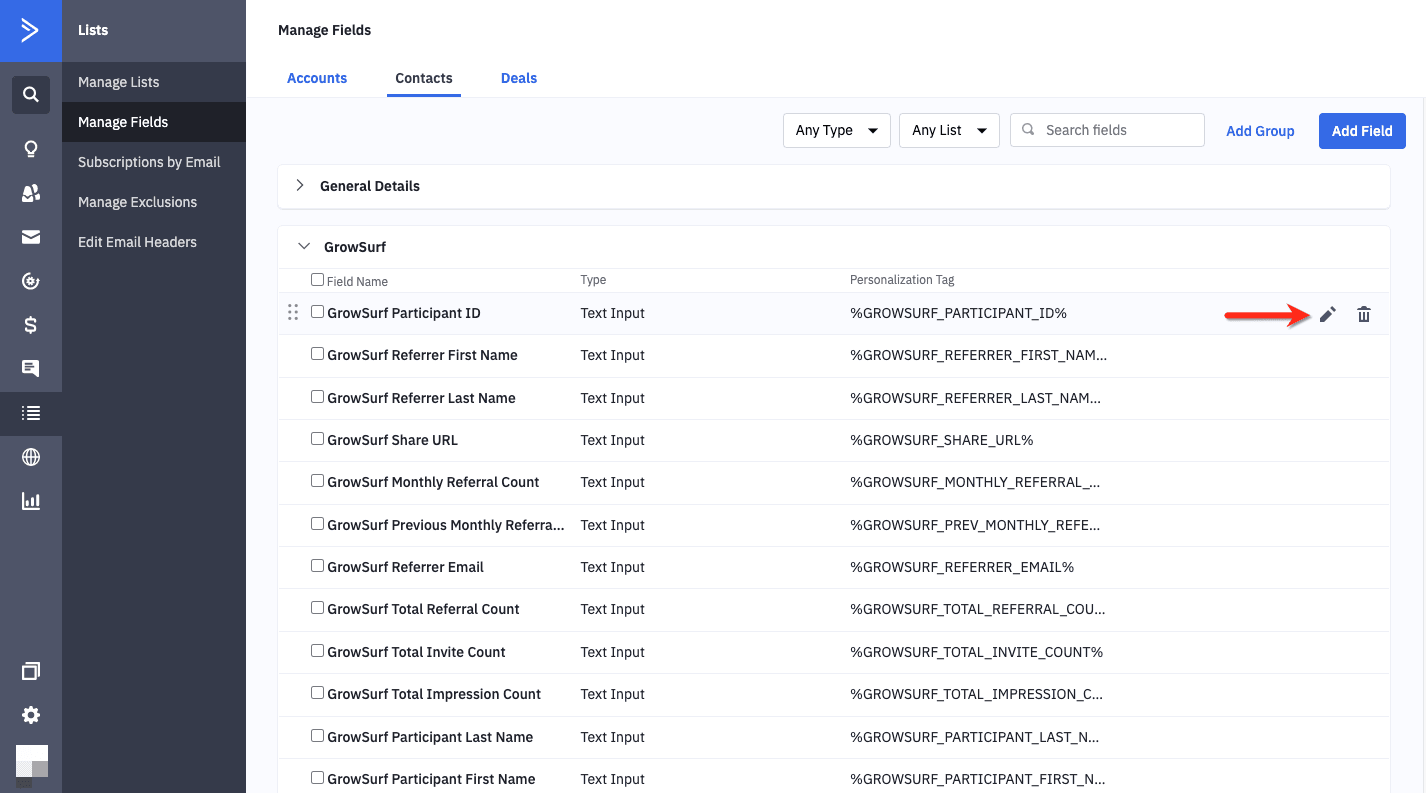
Before you build segments, verify that the GrowSurf fields are visible inside ActiveCampaign's custom field area. ActiveCampaign's own help docs confirm those custom contact fields can be used in the segment builder, automation conditions, and personalization workflows.
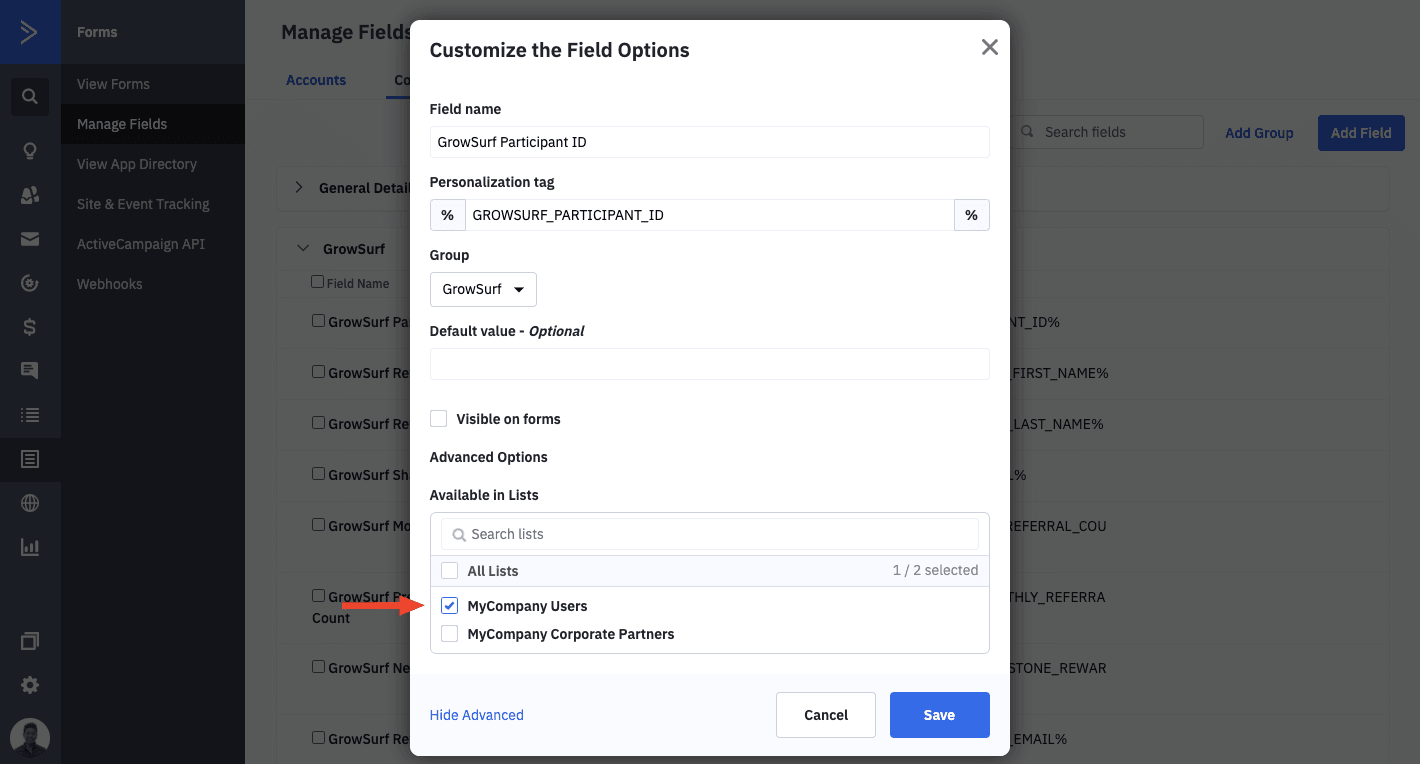
If a GrowSurf field is missing in a campaign or automation builder, revisit the field settings and confirm it is available to the same list GrowSurf syncs into.
%GROWSURF_TOTAL_REFERRAL_COUNT% equal to zero when you want a first-share nudge.%GROWSURF_REFERRAL_STATUS_ID% reflects awarded credit when you want advocacy or reward follow-up messaging.%GROWSURF_NEXT_MILESTONE% is populated when you want progress-focused reminders for near-reward participants.%GROWSURF_SHARE_URL% in the message itself so segmented contacts have an immediate referral CTA.Once the segment exists, you can attach it to normal ActiveCampaign campaigns, automation entry logic, or If/Else branches. That keeps the targeting tied directly to the referral data GrowSurf already syncs.
Check the same participant in GrowSurf and ActiveCampaign before the audience goes live. If the count, status, and milestone text match in both tools, your segment rules are grounded correctly.
GrowSurf already keeps the referral state on the ActiveCampaign contact. Starting with the synced fields is simpler and usually more reliable than trying to maintain a second manual tagging system.
%GROWSURF_SHARE_URL% is usually best used inside the email or automation message itself. Use referral count, referral status, and milestone text for the segment rules first.
If participants were imported before the integration was enabled, follow GrowSurf's ESP resync guidance so the contact data is corrected before you trust the segment.
Use GrowSurf referral fields in ActiveCampaign automations so new participants, active referrers, and reward earners get the right follow-up.
View Guide →
Turn synced GrowSurf profile properties into Klaviyo segments for new participants, active referrers, and people close to their next reward.
View Guide →
Use GrowSurf-synced Intercom custom data to build referral-aware audiences and reuse them across Intercom messages.
View Guide →Yes. ActiveCampaign's custom field documentation says custom contact fields are available in the segment builder and in automation field-based workflows, so the same GrowSurf fields can support both targeting and branching.
Start with %GROWSURF_TOTAL_REFERRAL_COUNT%, %GROWSURF_REFERRAL_STATUS_ID%, and %GROWSURF_NEXT_MILESTONE%. Those three fields cover zero-referral contacts, successful referrers, and near-reward participants.
Re-open the GrowSurf field in ActiveCampaign and confirm it is available to the list GrowSurf syncs into. If the list assignment is missing, the field may not appear where your team expects it.
Trusted by marketing and product teams at fast-growing B2C, fintech, and SaaS companies
Successfully submitted!
Error! Please try again
See referral programs that our customers have implemented.