
 Salesforce
 Stripe
 HubSpot
 Chargebee
 Recurly
 PayPal
 Tango Card
 Webhooks
 Zapier



Learn more
Built for startups,
scaled for unicorns
Successfully submitted!
Error! Please try again
See what it takes to set up a referral/affiliate program
Explore GrowSurf's powerful referral marketing platform
Watch a video demo of setting up a referral/affiliate program
GrowSurf plugs into your existing tools
GrowSurf vs other referral software providers
Explore our free suite of referral marketing tools.
Explore our free suite of tools built for startups.
Get discounts on top software and services like Notion, Deel, Apollo, and 1Password.
Explore Deals →
Our free loyalty software lets you reward your customers when they leave reviews, share on social media, and mention your brand.
Get It Free →Can you guess which startups made these growth tactics famous? Test your knowledge of innovative marketing strategies that led to explosive growth.
Play Now →
Want the full setup walkthrough?
Use these docs for exact setup steps, supported fields, and troubleshooting.
GrowSurf has a native Amplitude integration that sends referral events into your Amplitude project and identifies participants by email.
Once the integration is live, validate the incoming growsurf_* events in Amplitude before you build dashboards, cohorts, or funnel views on top of them.
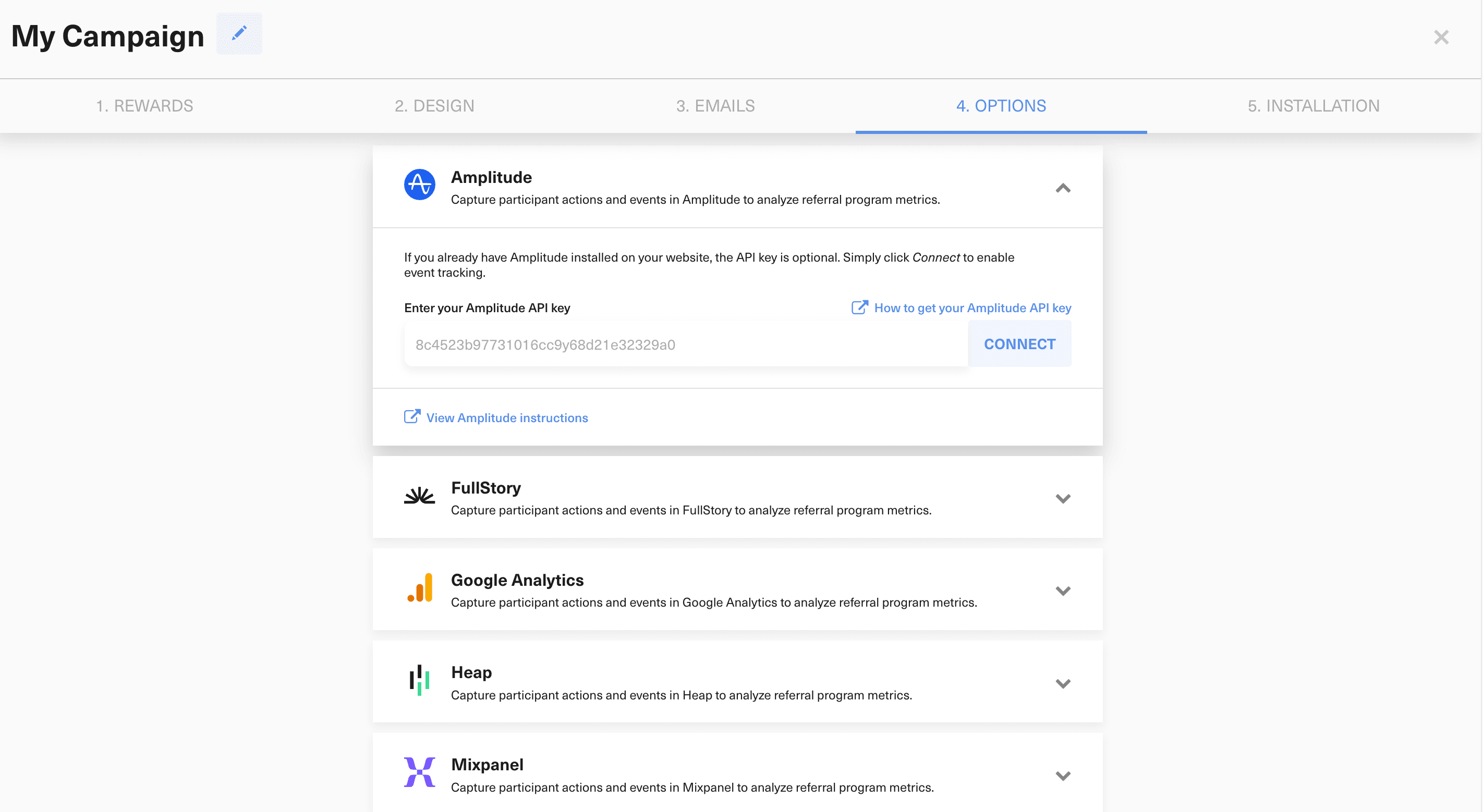
Open the Amplitude integration card in your GrowSurf campaign, enter your Amplitude API key, and click Connect. If you already load Amplitude on the same pages, the API key is optional, but GrowSurf still recommends adding it so referral events are covered everywhere they need to fire.
GrowSurf enables the Amplitude event set by default after you connect. The core referral event family is growsurf_signup, growsurf_share, growsurf_invite, growsurf_referral, and growsurf_referral_trigger.
growsurf_signup to confirm new referrers are joining the program.growsurf_share and growsurf_invite to measure sharing activity.growsurf_referral and growsurf_referral_trigger to separate referred signups from qualified referrals.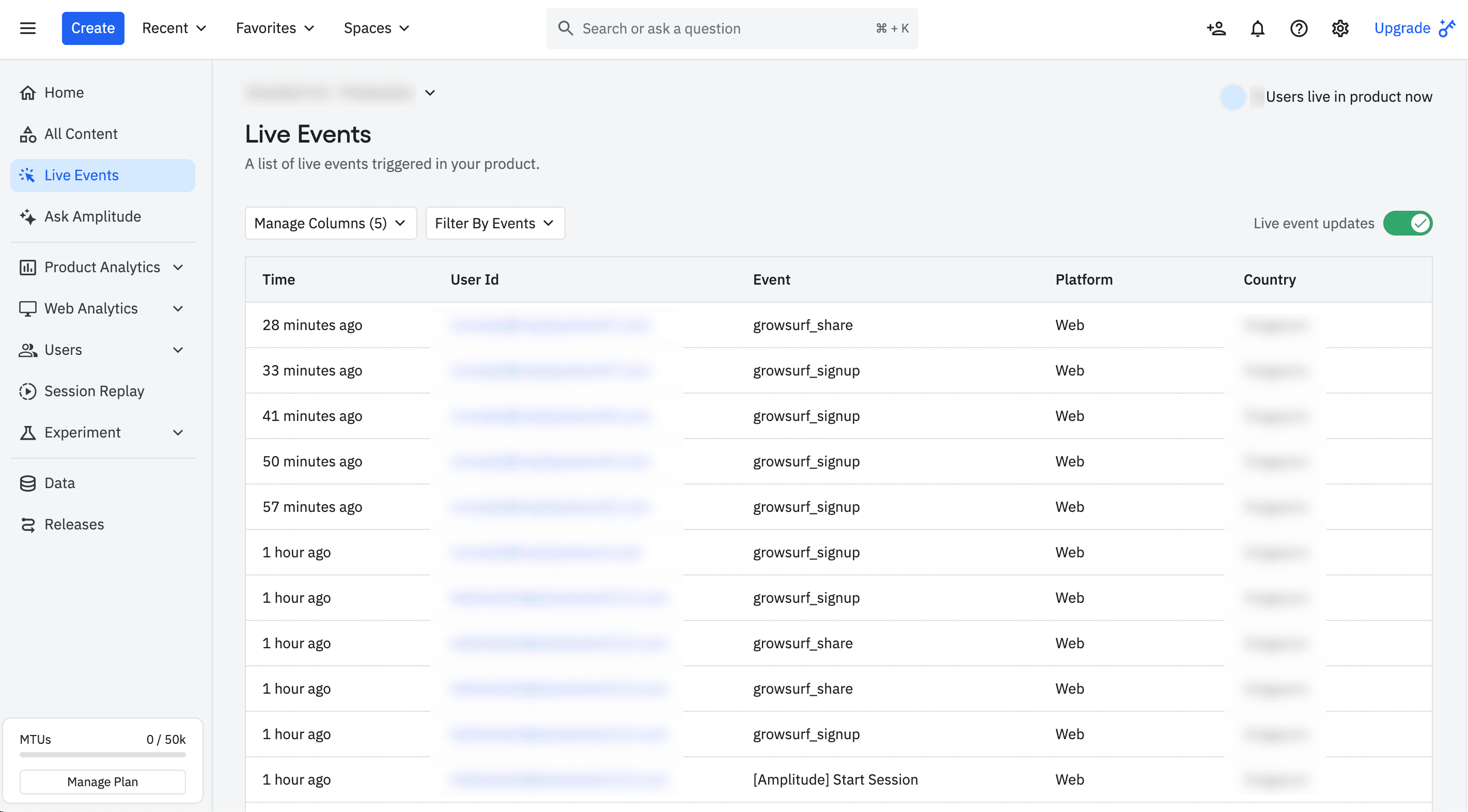
Before you trust any dashboard, open Live Events in Amplitude and make sure the GrowSurf events are arriving. GrowSurf's docs note that you should whitelist the referral portal and the referred-friend landing page in Amplitude so the full referral flow is tracked.
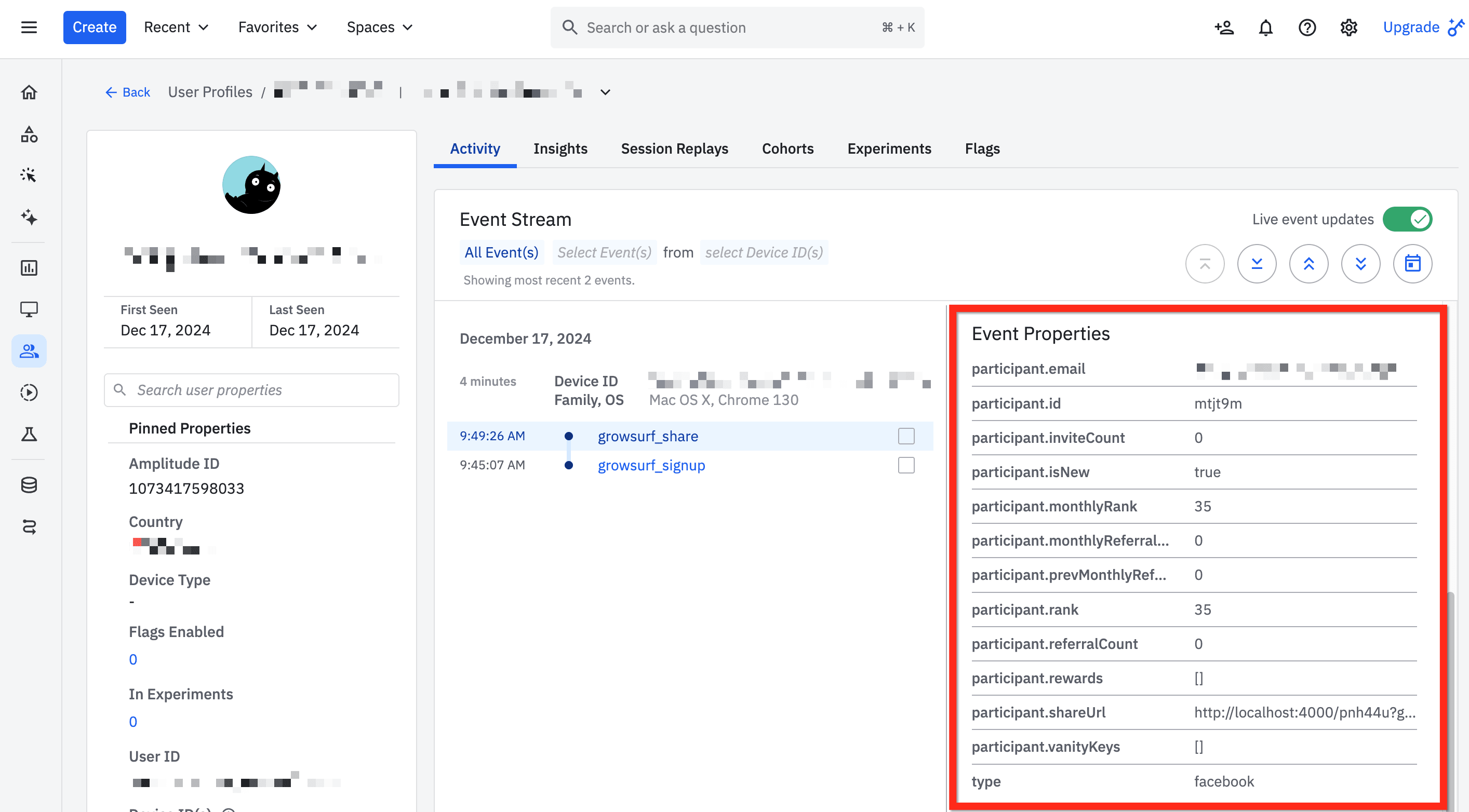
Click into one user in Amplitude and verify the event properties attached to the GrowSurf events. The user profile view is where you can spot mismatched participant emails, missing share URLs, or missing referral activity before those issues turn into reporting errors.
After the event stream looks correct, use the GrowSurf events in Amplitude charts, cohorts, or funnel reports. That gives your team one analytics layer for referrer joins, shares, invite sends, referred signups, and qualified referral triggers.
GrowSurf's docs call out that Amplitude can take up to 15 minutes to process incoming events, so check Live Events first before assuming the integration is broken.
If you no longer want GrowSurf sending Amplitude data, disconnect the integration entirely. Turning off a few event checkboxes is not the same as disconnecting the integration.
Use GrowSurf's Amplitude event stream to see how referrers and referred friends move from signup to share to qualified referral.
View Guide →
Connect the native Segment integration, verify the five GrowSurf referral events, and route clean referral data into the destinations you already use.
View Guide →
Connect GrowSurf to GA4 so referrer signups, shares, invites, referred signups, and qualified referral triggers appear as GrowSurf-tagged events in your reports.
View Guide →No. GrowSurf's docs say the API key is optional when you are certain Amplitude already loads on the relevant pages, but GrowSurf still recommends entering it to avoid missing referral surfaces.
Check for ad blockers, confirm the referral portal and referred-friend landing page are whitelisted, and allow up to 15 minutes for Amplitude to process the events.
GrowSurf identifies participants by email address and avoids double-loading the Amplitude library if Amplitude is already installed.
Trusted by marketing and product teams at fast-growing B2C, fintech, and SaaS companies
Successfully submitted!
Error! Please try again
See referral programs that our customers have implemented.