
 Salesforce
 Stripe
 HubSpot
 Chargebee
 Recurly
 PayPal
 Tango Card
 Webhooks
 Zapier



Learn more
Built for startups,
scaled for unicorns
Successfully submitted!
Error! Please try again
See what it takes to set up a referral/affiliate program
Explore GrowSurf's powerful referral marketing platform
Watch a video demo of setting up a referral/affiliate program
GrowSurf plugs into your existing tools
GrowSurf vs other referral software providers
Explore our free suite of referral marketing tools.
Explore our free suite of tools built for startups.
Get discounts on top software and services like Notion, Deel, Apollo, and 1Password.
Explore Deals →
Our free loyalty software lets you reward your customers when they leave reviews, share on social media, and mention your brand.
Get It Free →Can you guess which startups made these growth tactics famous? Test your knowledge of innovative marketing strategies that led to explosive growth.
Play Now →
Want the full setup walkthrough?
Use these docs for exact setup steps, supported fields, and troubleshooting.
GrowSurf sends referral events into Amplitude with the growsurf_* prefix, which gives you a clean event family for understanding how people move through your referral program.
After the events are flowing, use Amplitude's journey and path analysis tools to compare the referrer-side journey with the referred-friend journey and spot where conversion stalls.
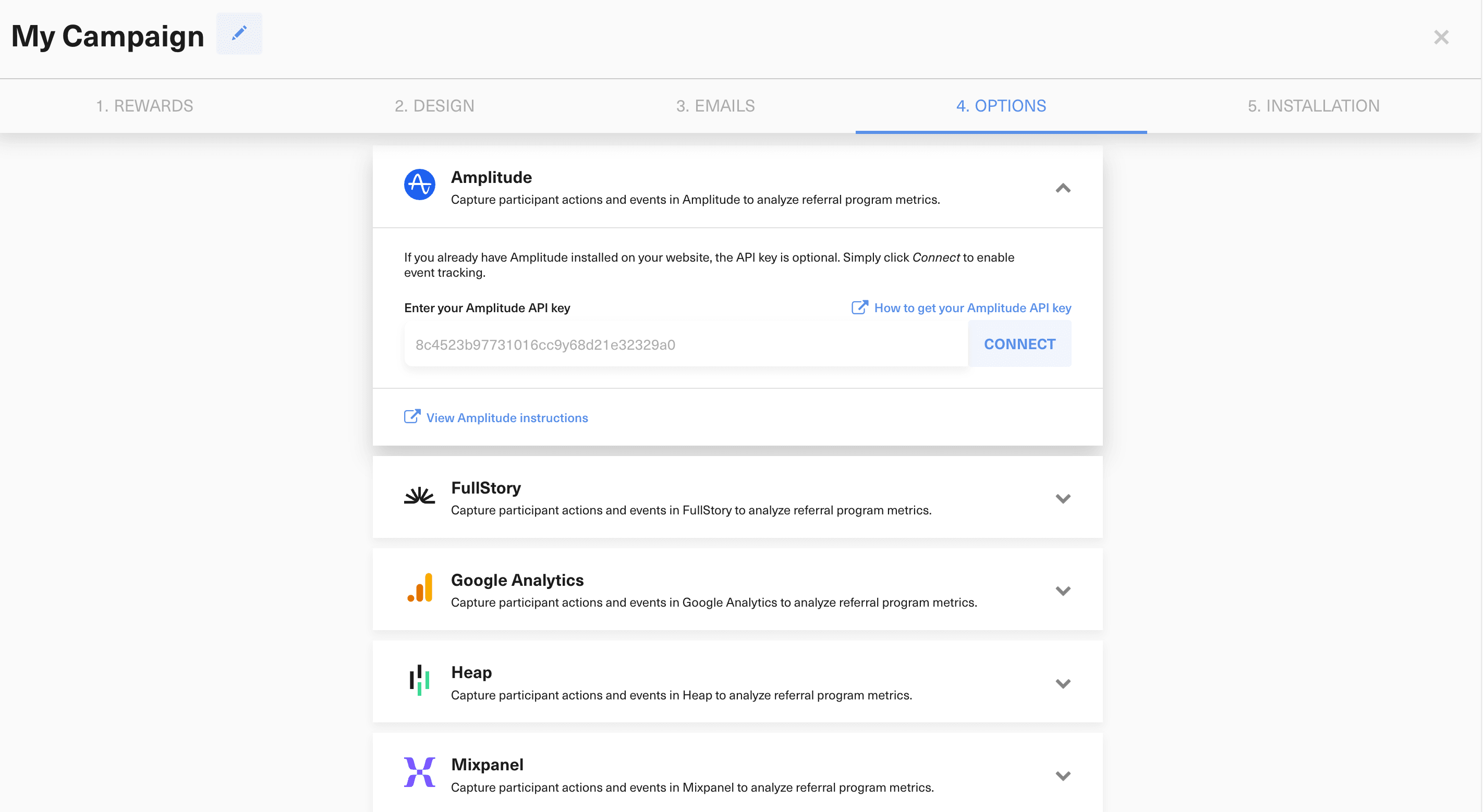
From Campaign Editor > 4. Options > Integrations, connect Amplitude and leave the GrowSurf analytics events enabled for the pages where referrers share and referred friends convert.
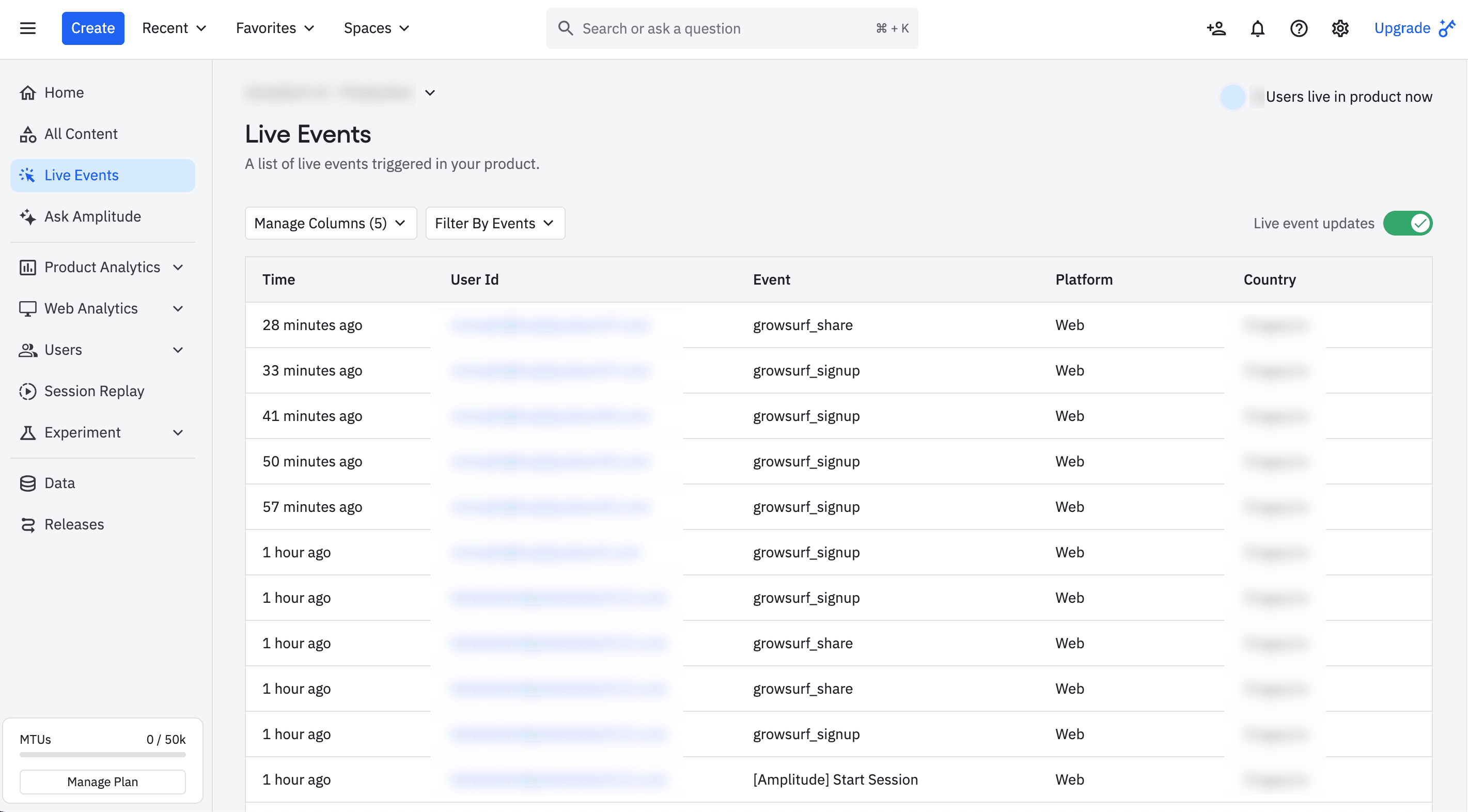
Open Live Events in Amplitude and make sure the GrowSurf event family is arriving. The main events to watch are growsurf_signup, growsurf_share, growsurf_invite, growsurf_referral, and growsurf_referral_trigger.
growsurf_signup and look at how often participants move into growsurf_share and growsurf_invite.growsurf_referral and then growsurf_referral_trigger to see how many referred signups become qualified referrals.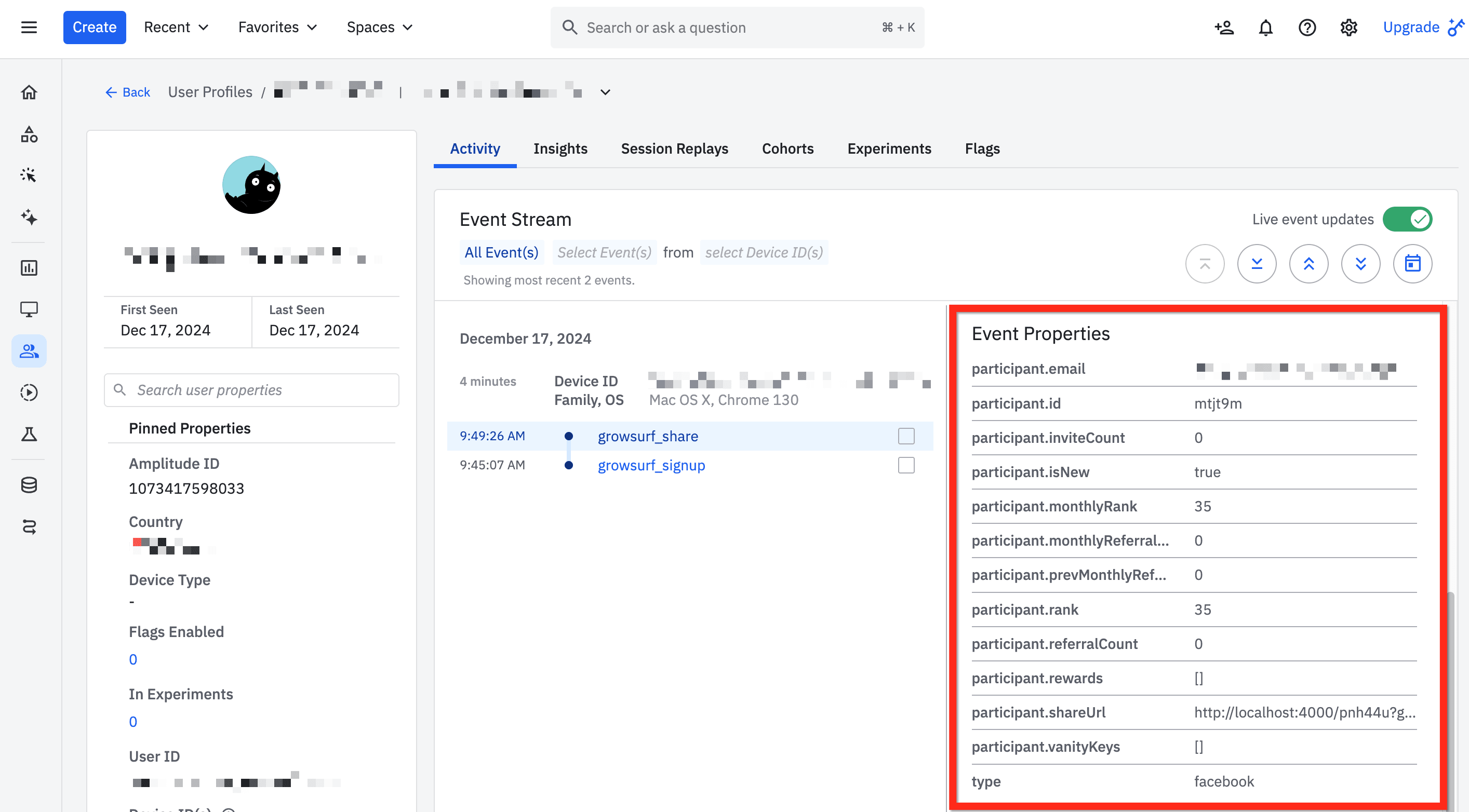
Open a real participant in Amplitude and inspect the event stream and properties attached to their GrowSurf events. This helps you understand whether a path break is caused by missing traffic coverage, the wrong participant email, or real user behavior.
Once the events and properties look correct, use Amplitude's journey analysis to compare sequences such as signup → share → referral trigger or signup → invite → referral. That makes it easier to see where high-intent participants drop off and which referral surfaces deserve more attention.
The quickest way to trust a journey report is to trace one participant from GrowSurf into Amplitude first, then scale that logic into a broader report.
Those two user paths answer different questions. Separating them early makes it much easier to spot whether the main issue is sharing behavior or post-click conversion.
Connect GrowSurf to Amplitude so you can verify referral events, inspect participant properties, and build reporting around referral activity.
View Guide →
Use GrowSurf referral events in Mixpanel Funnels to see where participants drop between signup, sharing, invite, and qualified referral.
View Guide →
Use GrowSurf's GA4 events to separate referrer activity from referred-friend signups and the downstream actions that actually count as successful referrals.
View Guide →Start with growsurf_signup, growsurf_share, growsurf_invite, growsurf_referral, and growsurf_referral_trigger. Those events cover both the referrer path and the referred-friend path.
Yes. GrowSurf sends events for both sides of the referral flow, so you can compare their sequences inside the same Amplitude project.
Make sure the referral portal and the referred-friend landing page are whitelisted, watch for ad blockers or browser extensions that block analytics requests, and allow Amplitude time to process incoming events.
Trusted by marketing and product teams at fast-growing B2C, fintech, and SaaS companies
Successfully submitted!
Error! Please try again
See referral programs that our customers have implemented.