
 Salesforce
 Stripe
 HubSpot
 Chargebee
 Recurly
 PayPal
 Tango Card
 Webhooks
 Zapier



Learn more
Built for startups,
scaled for unicorns
Successfully submitted!
Error! Please try again
See what it takes to set up a referral/affiliate program
Explore GrowSurf's powerful referral marketing platform
Watch a video demo of setting up a referral/affiliate program
GrowSurf plugs into your existing tools
GrowSurf vs other referral software providers
Explore our free suite of referral marketing tools.
Explore our free suite of tools built for startups.
Get discounts on top software and services like Notion, Deel, Apollo, and 1Password.
Explore Deals →
Our free loyalty software lets you reward your customers when they leave reviews, share on social media, and mention your brand.
Get It Free →Can you guess which startups made these growth tactics famous? Test your knowledge of innovative marketing strategies that led to explosive growth.
Play Now →
Want the full setup walkthrough?
Use these docs for exact setup steps, supported fields, and troubleshooting.
GrowSurf's Mixpanel integration sends referral events into Mixpanel and identifies both referrers and referred friends by email. If Mixpanel is already installed on your site, GrowSurf avoids loading the library twice.
Once that event stream is live, Mixpanel cohorts give you a clean way to group people by referral behavior, compare those groups in later reports, and keep your analysis tied to real GrowSurf activity instead of guessed campaign tags.
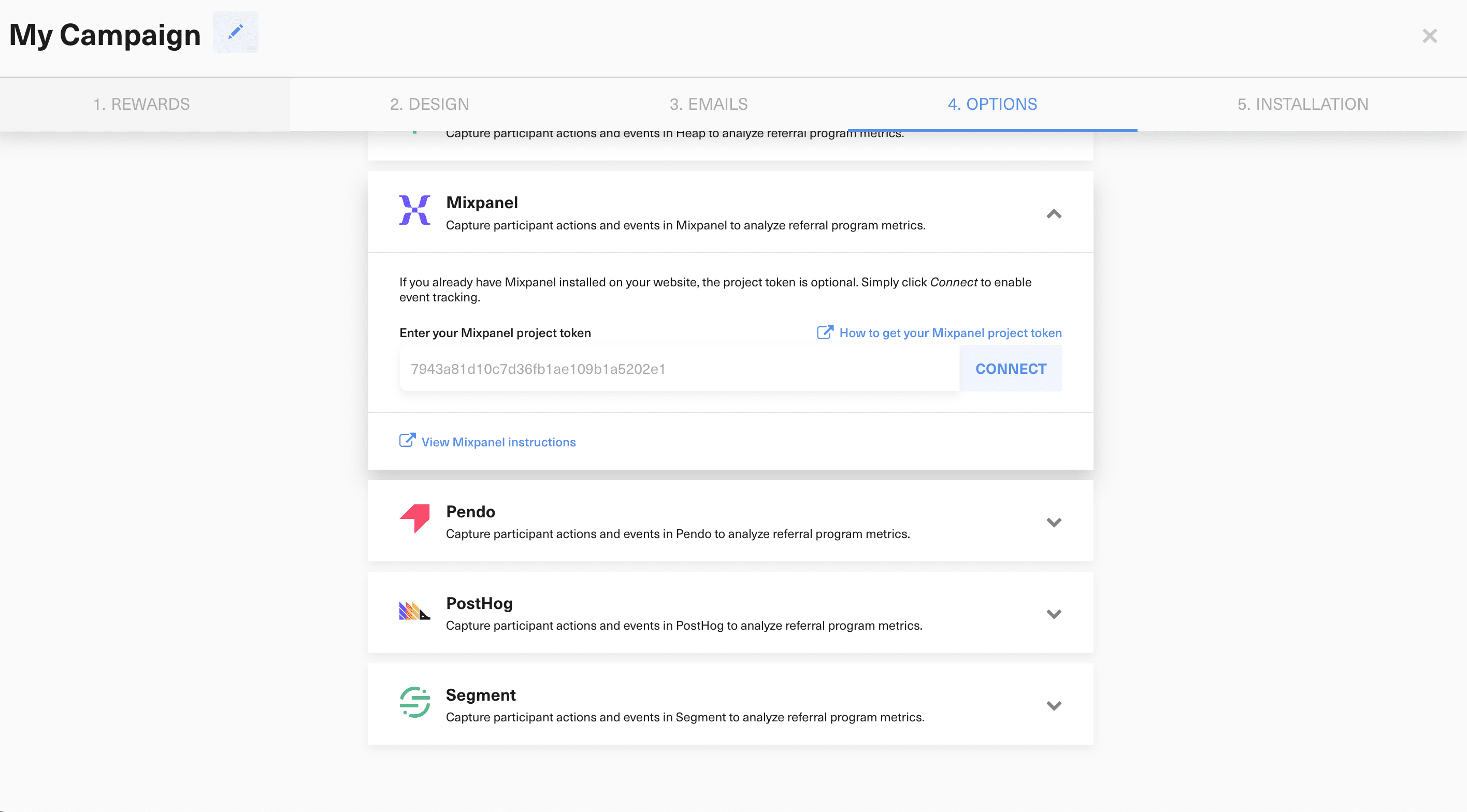
In GrowSurf, open Campaign Editor > 4. Options > Integrations, open the Mixpanel card, and enter your Mixpanel project token if needed. If you already run Mixpanel everywhere the referral flow happens, the token is optional, but GrowSurf still recommends adding it so URLs without Mixpanel installed do not get missed.
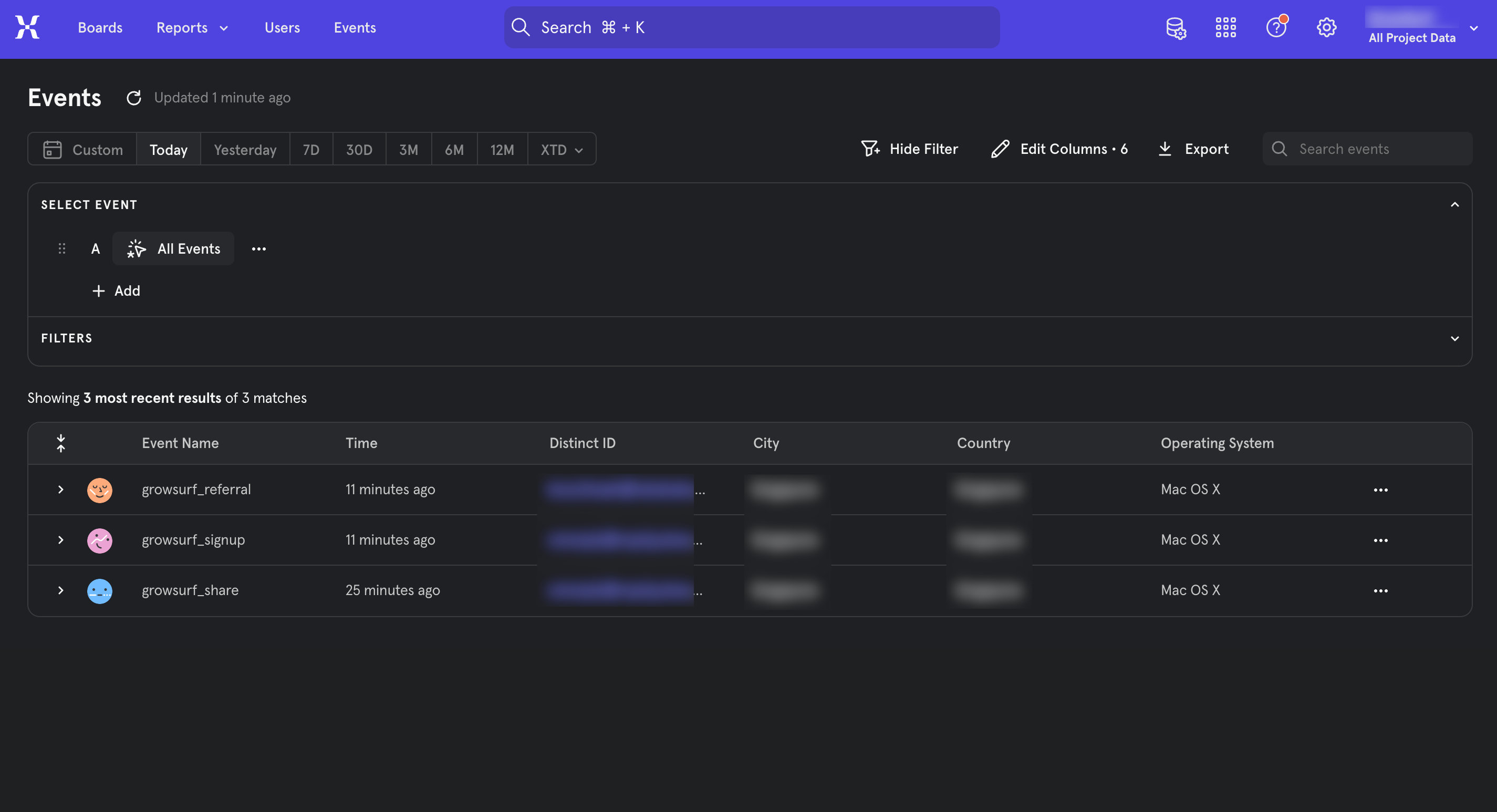
GrowSurf emits five core Mixpanel events: growsurf_signup, growsurf_share, growsurf_invite, growsurf_referral, and growsurf_referral_trigger. Whitelist the referral portal URL and the referred-friend landing page in Mixpanel, then allow up to 15 minutes for new events to appear.
growsurf_signup and excluding people with growsurf_share.growsurf_share or growsurf_invite activity.growsurf_referral_trigger instead of only signing up.Those cohorts become the reusable audience layer you can compare inside Mixpanel analysis later.
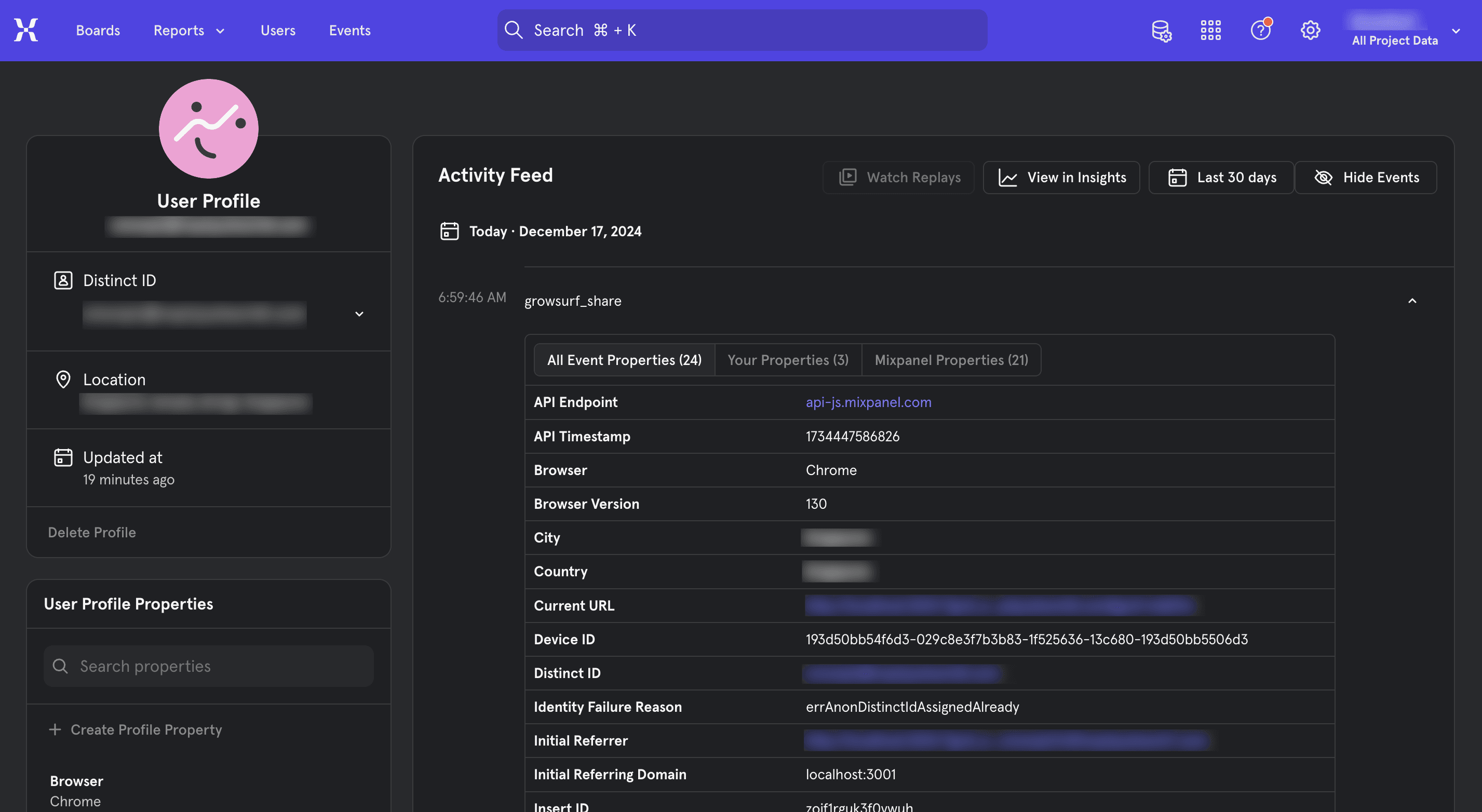
Open a known participant in Mixpanel and verify the email identity, event order, and event names against the same person in GrowSurf. That is the fastest way to catch bad assumptions before a cohort powers dashboards or alerts.
Once the cohort definitions are correct, compare them in Mixpanel reports such as funnels, retention views, or other saved analyses. This is where you can separate first-time sharers from proven referrers and see whether converted referrals behave differently from the rest of your users.
Build the first version of each cohort from the GrowSurf event names that you can verify in Mixpanel. Add extra Mixpanel properties only after the core referral grouping is correct.
Mixpanel can show referrer-side events and referred-friend events in the same project, so build cohorts for both roles instead of only tracking shares from existing users.

Connect GrowSurf to Amplitude so you can verify referral events, inspect participant properties, and build reporting around referral activity.
View Guide →
Connect the native Segment integration, verify the five GrowSurf referral events, and route clean referral data into the destinations you already use.
View Guide →
Use GrowSurf's GA4 events to separate referrer activity from referred-friend signups and the downstream actions that actually count as successful referrals.
View Guide →The main events are growsurf_signup, growsurf_share, growsurf_invite, growsurf_referral, and growsurf_referral_trigger. Those events let you separate people who joined, shared, referred friends, and completed a qualifying referral.
No. This guide is based on GrowSurf's native Mixpanel integration. Once the integration is connected and the events are visible in Mixpanel, you can build cohorts directly from that event stream.
Because one user profile confirms that the email identity and event order in Mixpanel match the participant record in GrowSurf. That check catches the most common setup errors before they spread into saved analysis.
Trusted by marketing and product teams at fast-growing B2C, fintech, and SaaS companies
Successfully submitted!
Error! Please try again
See referral programs that our customers have implemented.