
 Salesforce
 HubSpot
 Chargebee
 Recurly
 PayPal
 Tango Card
 Webhooks
 Zapier



Learn more
Built for startups,
scaled for unicorns
Successfully submitted!
Error! Please try again
See what it takes to set up a referral/affiliate program
Explore GrowSurf's powerful referral marketing platform
Watch a video demo of setting up a referral/affiliate program
GrowSurf plugs into your existing tools
GrowSurf vs other referral software providers
Explore our free suite of referral marketing tools.
Explore our free suite of tools built for startups.
Get discounts on top software and services like Notion, Deel, Apollo, and 1Password.
Explore Deals →
Our free loyalty software lets you reward your customers when they leave reviews, share on social media, and mention your brand.
Get It Free →Can you guess which startups made these growth tactics famous? Test your knowledge of innovative marketing strategies that led to explosive growth.
Play Now →
Want the full setup walkthrough?
Use these docs for exact setup steps, supported fields, and troubleshooting.
Use Stripe credits when a referral reward should behave like balance on the customer account instead of a coupon code. This works well for subscription businesses that want rewards to accumulate and apply against future invoices.
GrowSurf handles the reward event and Stripe keeps the customer balance. You do not need a separate webhook or cron job to post the credit manually.
GrowSurf requires a default currency for Stripe rewards. That currency determines which Stripe customers or subscriptions can receive the reward, so set it before you connect the credit rule.
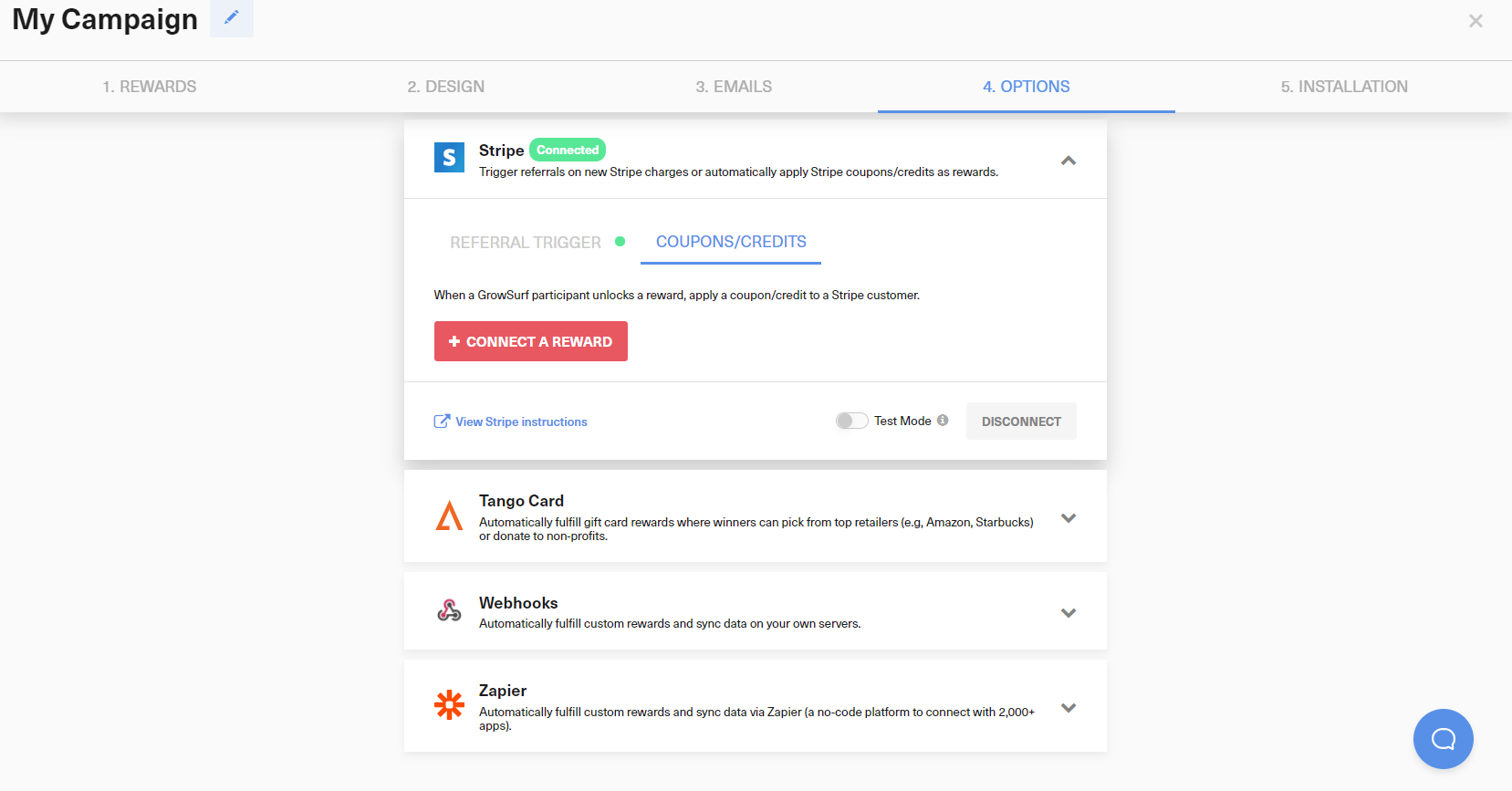
After Stripe is connected, open Coupons/Credits and connect the reward you want GrowSurf to automate. Disable Referral Trigger in Stripe only if you are using a different qualifying action for the reward.
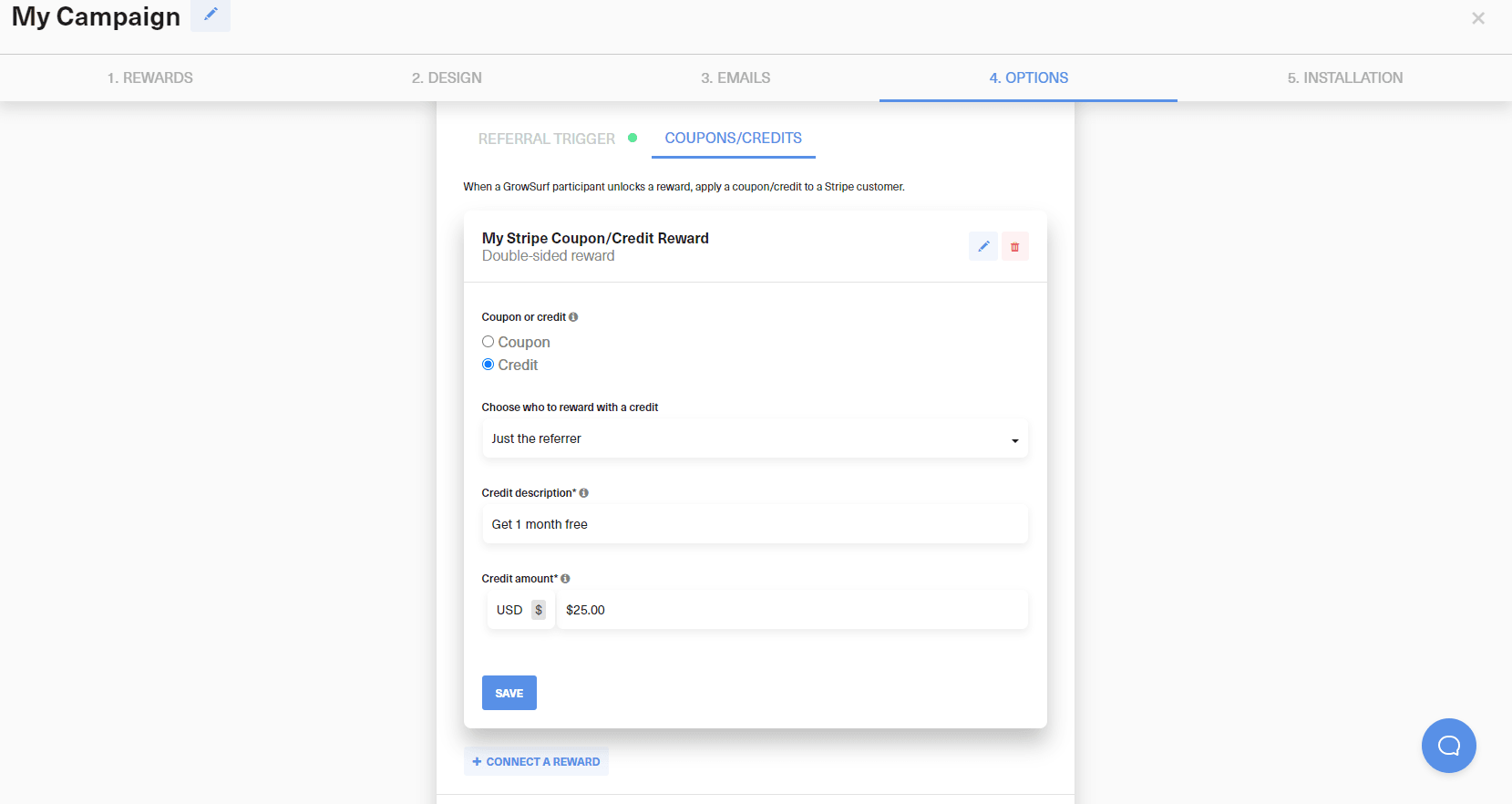
When you choose Credit, set the description, amount, and who should receive it. In double-sided rewards, GrowSurf can issue the credit to the referrer, the referred customer, or both.
Once saved, GrowSurf applies the Stripe credit whenever the reward unlocks. If your campaign uses manual reward approval, the credit is only issued after the reward has been approved.
If the credit does not show up, check whether the customer exists in the same Stripe mode you connected, whether the currencies match, and whether the customer email still matches the GrowSurf participant record.
Credits are the cleaner choice when you want each earned reward to accumulate on the customer balance instead of replacing the last discount.
If the reward is waiting on approval or no dynamic rule matched, the credit will not be issued yet even though the participant may look eligible at first glance.
Use Stripe coupons or credits as subscription rewards so referred revenue unlocks a billing benefit without manual coupon creation.
View Guide →Use GrowSurf to issue Stripe coupons for referrers or referred friends, and optionally surface an upfront promotion code before checkout.
View Guide →Use Stripe charge events as the qualifying referral action and keep the participant and referrer trail attached to the right customer record.
View Guide →Use a credit when you want the reward to sit on the Stripe customer balance and apply against billing automatically instead of giving the customer a coupon code to redeem.
Yes. GrowSurf supports Stripe test mode, but test-mode reward connections are separate from live-mode reward connections.
The most common causes are a missing Stripe customer in the connected mode, a currency mismatch, or an email mismatch between the Stripe customer and the GrowSurf participant.
Trusted by marketing and product teams at fast-growing B2C, fintech, and SaaS companies
Successfully submitted!
Error! Please try again
See referral programs that our customers have implemented.