

 Salesforce
 Stripe
 HubSpot
 Chargebee
 PayPal
 Wise
Wise Tango Card
 Tremendous
 Recurly
 Braze
Braze Zapier
 Webhooks







Overall Conversion Rate Benchmarks
The average website conversion rate across industries is 2.35%, with the top 25% converting at 5.31% or higher. (WordStream)
The top 10% of websites achieve conversion rates of 11.45% or higher. (WordStream)
E-commerce average conversion rate is 1.8-2.8% across all devices. (Statista)
SaaS free trial conversion rates average 15-25% for opt-in trials. (ProfitWell)
B2B landing pages average a 2.23% conversion rate. (Unbounce)
Lead generation landing pages average a 4.02% conversion rate. (Unbounce)
The median landing page conversion rate is 4.3% across industries. (Unbounce)
Healthcare landing pages have the lowest average conversion rate at 2.9%. (Unbounce)
Finance and insurance landing pages have the highest at 5.6%. (Unbounce)
Conversion Rates by Channel
Referral traffic converts at 3.6%, compared to 1.5% for general website visitors. (Extole)
Organic search traffic converts at 2.8% on average. (WordStream)
Email marketing converts at 3.2-4.5% depending on list quality. (Mailchimp)
Paid search converts at 3.17% for search ads and 0.46% for display ads. (WordStream)
Social media traffic converts at 1.3-2.4% across platforms. (Statista)
Direct traffic converts at 2.9%, indicating strong brand intent. (Statista)
Affiliate traffic converts at 1-5% depending on affiliate quality and industry. (Awin Global Affiliate Report)
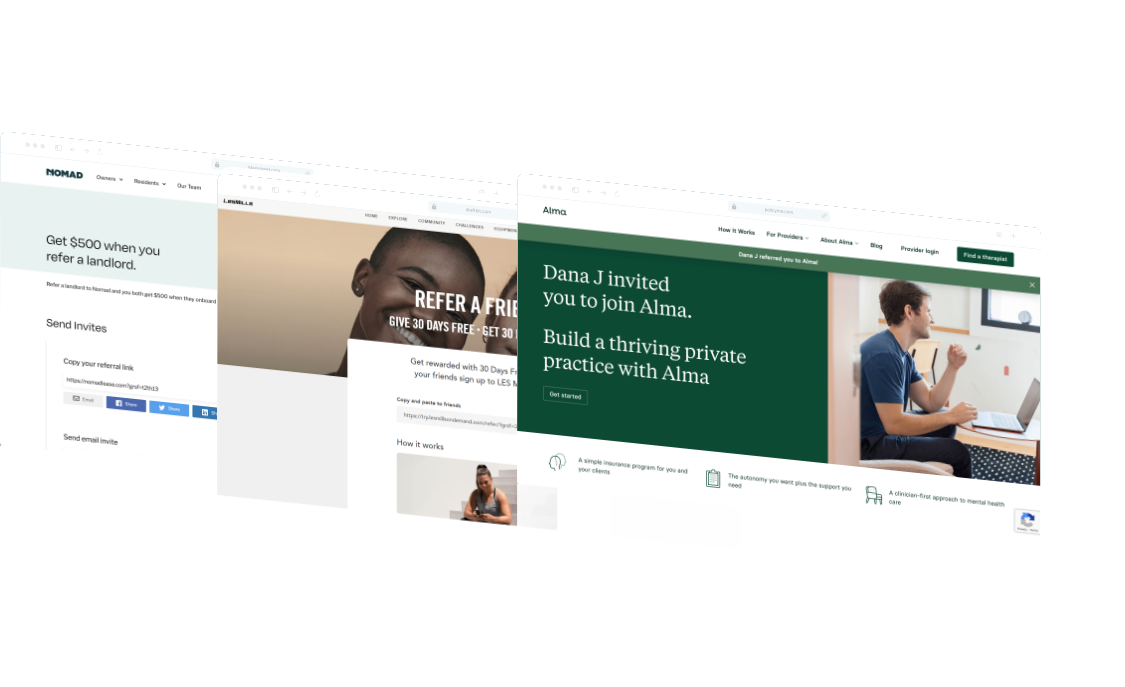
Referral program landing pages convert at 2-3x the rate of standard landing pages. (Friendbuy)
Mobile vs. Desktop Conversion Rates
Desktop conversion rates average 4.14%, compared to 1.53% on mobile. (Statista)
Tablet conversion rates average 3.36%, falling between desktop and mobile. (Statista)
Mobile traffic accounts for 65% of all web traffic but only 35% of conversions. (eMarketer)
Mobile conversion rates have improved by 30% over the past three years as mobile UX has matured. (Baymard Institute)
Progressive web apps (PWAs) increase mobile conversion rates by 36%. (Google)
Mobile checkout abandonment rate is 85.6%, compared to 72.6% on desktop. (Baymard Institute)
One-click checkout options increase mobile conversion rates by 35%. (Bolt)
Conversion Rate Optimization Strategies
A/B testing improves conversion rates by an average of 12-15% per successful test. (Optimizely)
Reducing page load time from 5 seconds to 1 second increases conversions by 70%. (Google)
Adding social proof elements increases conversion rates by 15-20%. (BrightLocal)
Personalized CTAs convert 202% better than generic CTAs. (HubSpot)
Video on landing pages increases conversions by 80%. (Unbounce)
Removing one form field increases conversion rates by an average of 11%. (Formstack)
Exit-intent popups recover 10-15% of abandoning visitors. (OptinMonster)
Trust badges and security seals increase conversions by 32%. (Baymard Institute)
E-commerce Conversion Benchmarks
The average e-commerce cart abandonment rate is 69.8%. (Baymard Institute)
Unexpected shipping costs cause 48% of cart abandonments. (Baymard Institute)
Offering free shipping increases conversion rates by 30%. (Annex Cloud)
Product reviews increase conversion rates by 12-22%. (Spiegel Research Center)
Product pages with 3+ images convert 40% better than single-image pages. (Shopify)
Retargeting campaigns recover 8-12% of abandoned carts. (Criteo)
Buy-now-pay-later options increase conversion rates by 20-30% for purchases over $100. (Klarna)
Referral-Specific Conversion Data
Referred visitors convert at 3-5x the rate of non-referred visitors. (McKinsey & Company)
Referral programs with personalized landing pages see 28% higher conversion rates. (Optimizely)
Double-sided referral incentives increase conversion of referred leads by 35%. (SaaSquatch)
Referral links with social proof (e.g., showing friend's name) increase conversion by 25%. (Mention Me)
Mobile-optimized referral flows convert 55% better than non-optimized flows. (eMarketer)
Referral program A/B testing yields 34% higher conversion improvements than standard page testing. (Optimizely)
Pre-filled referral forms increase completion rates by 40%. (Friendbuy)